A backyard usually stops feeling useful long before it runs out of square footage. The issue is rarely size. More often, it is layout, materials, drainage, or the lack of a clear purpose. The best outdoor living space design ideas solve those problems together, turning an open yard into a place that feels comfortable, durable, and worth using year-round.
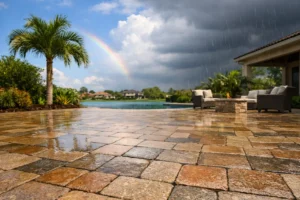
In Tampa Bay, that matters even more. Heat, rain, humidity, and frequent foot traffic can expose weak installation work fast. A beautiful patio means less if it holds water after a storm, shifts underfoot, or starts looking worn after a season of use. Good design has to look right and perform right.
Start with function before style
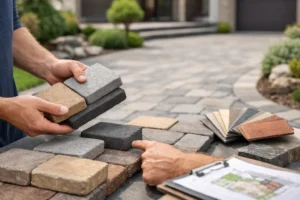
Homeowners often begin with colors, paver patterns, or photos they have saved online. Those details matter, but they come after the bigger question: how do you want the space to work?
A family that hosts weekend cookouts needs a different layout than a homeowner who wants a quiet seating area near the pool. Some properties need room for dining, a grill zone, and a walkway that keeps wet feet off the grass. Others need a front-to-back improvement plan that ties together a driveway, entry path, and rear patio with the same design language.
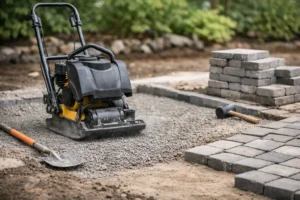
When the function is clear, the design decisions get easier. You can decide where shade should go, how much hardscape is needed, and which features deserve the most space. This is also where experienced hardscape planning makes a difference. Proper grading, base prep, and drainage are not extras. They are what allow the finished space to hold up in Florida conditions.
Outdoor living space design ideas that work in Florida
1. Build the layout around a paver patio
For most homes, the patio is the anchor. It gives the yard a defined center and creates a stable surface for furniture, dining, and everyday use. Pavers are especially practical because they offer a clean, finished look while handling weather and movement better than plain poured concrete in many cases.
A well-designed patio should fit the scale of the house and the way the family lives. Too small, and it feels crowded as soon as chairs are added. Too large, and it can feel exposed or disconnected from the rest of the yard. In Florida, textured pavers in lighter tones are often a smart choice because they stay more comfortable underfoot and help brighten the space.
2. Create separate zones instead of one large flat area
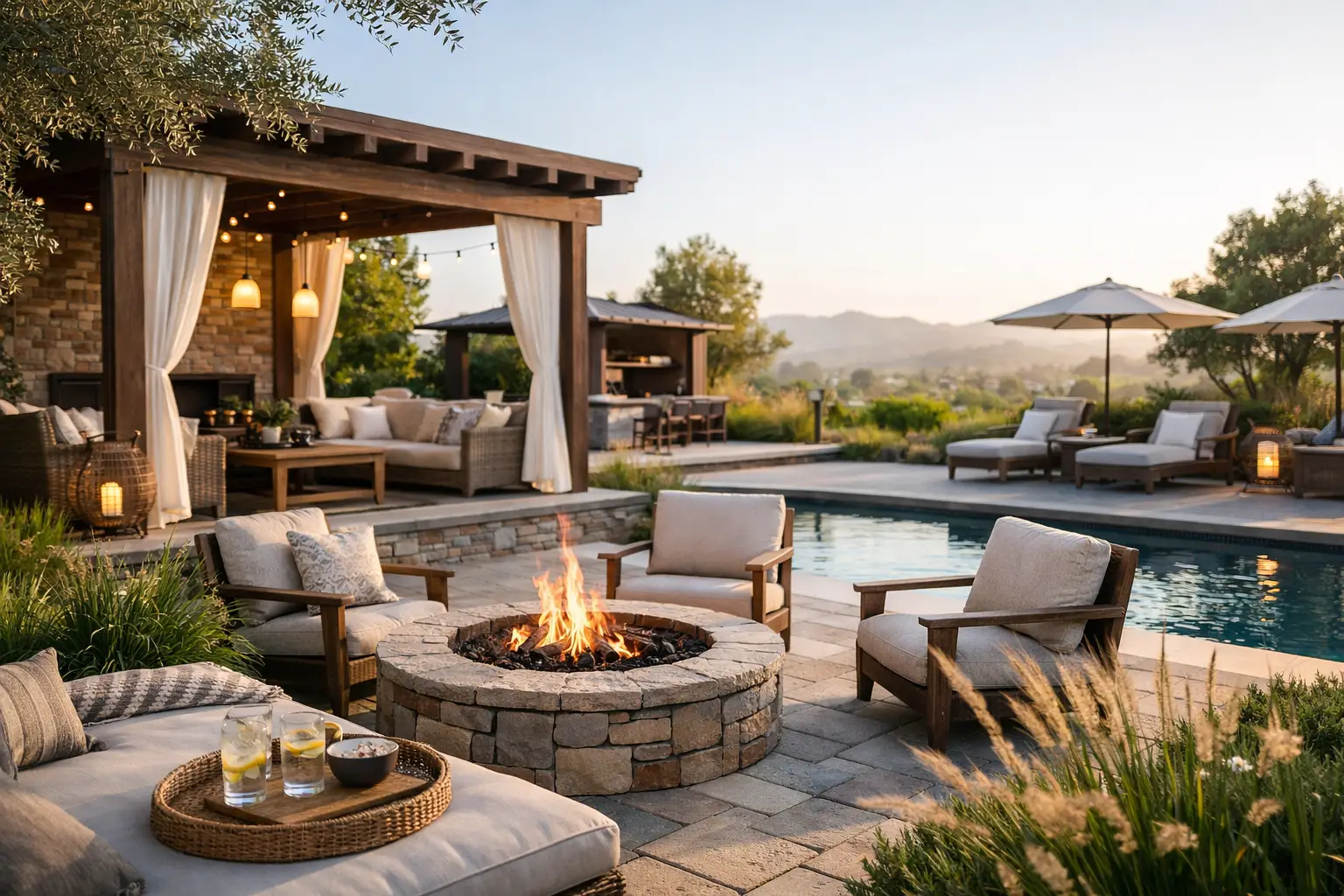
One of the most effective outdoor living space design ideas is to break the yard into usable zones. That might mean a dining area under a pergola, a lounge space around a fire feature, and a walkway that connects the patio to the pool or side yard.
This approach makes the space feel intentional. It also helps traffic flow. Guests should not have to cut through a seating area to reach the grill, and kids coming from the pool should have a clear path that does not turn the entire patio into a wet slip zone. Low walls, changes in paver pattern, steps, or planters can define areas without making the yard feel closed off.
3. Add shade where you will actually use it
Shade is not a luxury in Tampa Bay. It is often the reason a beautiful yard gets used in July instead of avoided until sunset. Pergolas, covered patio sections, and strategically placed structures can make a major difference in comfort.
The key is placement. Shade should protect the areas where people spend time, not just fill an empty corner of the yard. A pergola over the dining area usually delivers more daily value than one placed purely for symmetry. Covered structures also pair well with outdoor fireplaces, ceiling fans, and lighting, helping the yard stay functional across seasons and times of day.
4. Treat the pool deck as part of the living space
Around many Florida homes, the pool deck is already the most active outdoor area. The mistake is treating it like a separate surface instead of part of the overall design.
A paver pool deck can tie the whole backyard together while improving traction, appearance, and comfort. It can also create room for loungers, dining, and pathways that feel integrated instead of pieced together. Material selection matters here. The surface should be slip-resistant, easy to maintain, and designed with drainage in mind. Standing water around a pool is both a visual problem and a usability problem.
5. Use walkways to connect spaces cleanly
Good walkways do more than move people from one point to another. They organize the property. They guide foot traffic, protect grass from wear, and help different outdoor features feel connected.
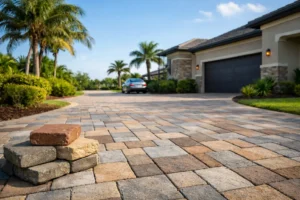
This matters on both large and compact lots. A simple walkway from the driveway to the backyard gate can improve convenience and curb appeal at the same time. In rear yards, paths can connect patios, pool decks, fire features, and garden spaces in a way that makes the whole property feel finished. The best walkway design looks natural with the architecture of the home and the rest of the hardscape.
6. Bring in vertical elements for depth
Flat yards can feel unfinished even when the paving work is extensive. Vertical features add depth and help define the space. Retaining walls, seat walls, columns, steps, fireplaces, and pergolas all change the visual balance of the yard.
They also add practical value. A seat wall can provide built-in seating without cluttering the patio with extra furniture. A retaining wall may be necessary to manage grade changes while making the design feel intentional instead of purely functional. An outdoor fireplace can become a focal point that extends the usefulness of the space during cooler evenings.
This is one of those areas where craftsmanship matters. Vertical masonry features need to be built for stability, not just appearance.
The details that separate a good project from a costly redo
Drainage is part of the design
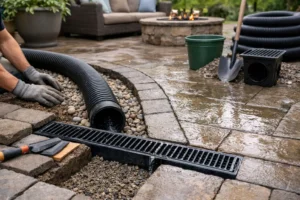
Homeowners usually notice color and pattern first, but drainage often determines whether they stay happy with the project. If water collects on a patio, runs toward the house, or settles along a pool deck, the space will never perform the way it should.
That is why excavation, grading, and base compaction matter so much. A hardscape should move water where it belongs while keeping the surface stable over time. In Florida, where heavy rain can arrive fast, that planning is not optional.
Material choice should match real use
Not every surface belongs in every space. Driveway pavers need different performance characteristics than pool deck materials. The patio used for outdoor dining may need a different texture or color approach than the front entry or a garden path.
There is always a balance between appearance, maintenance, and budget. A design that looks impressive in a photo may not be the best fit for full sun, wet feet, or frequent entertaining. Choosing the right material means thinking about the day-to-day experience, not just the reveal day.
Lighting should support the layout
Lighting often gets added late, but it works best when considered early. Soft lighting along walkways, steps, seating walls, and patio edges improves both safety and atmosphere. It also helps the space stay useful after dark, which matters in a climate where evenings are often the most comfortable time to be outside.
The goal is not to overlight everything. It is to make the layout readable and inviting.
Designing for long-term value
The best outdoor spaces do more than look finished. They reduce maintenance headaches, improve daily use, and add value to the property. That value comes from both design and installation quality.
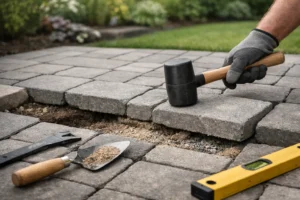
A clean paver layout with proper edge restraint, strong base preparation, and professional finishing will usually outperform quick cosmetic upgrades that ignore the structural side of the work. Homeowners feel that difference over time. The surface stays level, drainage works properly, and the project continues to support the way the home is used.
For Tampa Bay properties, that long-term thinking matters. Coastal moisture, summer storms, heat, and constant use can expose shortcuts fast. A dependable hardscape contractor should be thinking beyond the look of the final photo and focusing on how the space will perform years from now.
If you are weighing outdoor living upgrades, start with the way you want the space to feel on a regular Saturday afternoon, not just how you want it to look when it is brand new. The right design will make the yard easier to enjoy, easier to maintain, and far more connected to the way you actually live.