
A paver patio or driveway should feel solid underfoot, not soft, uneven, or sunken after every heavy rain. If you’re searching for how to fix sinking pavers, the real answer is not just lifting the low spot and tossing in a little sand. The repair only lasts when the base, compaction, and drainage are corrected underneath the surface.
In Tampa Bay, that matters even more. Florida soils shift, storms hit hard, and water finds every weak point in a hardscape. A paver repair that looks fine for a month can sink again by the next rainy season if the underlying issue was never addressed.
Why pavers sink in the first place
Most sinking pavers are a symptom, not the problem itself. The pavers on top are simply showing you that the layers below have moved, washed out, or were not installed with enough support to begin with.
One common cause is poor base preparation. If the excavation was too shallow, the base material was too thin, or the area was not compacted in lifts, the surface can settle over time under foot traffic or vehicle weight. This shows up often in driveways, walkways, and around pool decks where repeated use exposes weak spots.
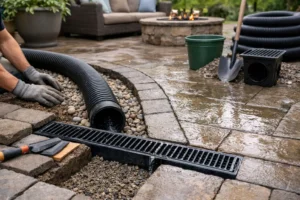
Drainage is another major factor. When water collects beneath pavers or runs through the edge of the installation, it can erode bedding sand and base material. In Florida, intense rain can do this quickly. You may also see sinking near downspouts, low yard areas, gutter discharge points, or places where the grade sends water back toward the hardscape instead of away from it.
Tree roots, ant activity, failing edge restraints, and utility trench settlement can also create isolated dips. The fix depends on the cause. A small settled section in a patio is a different repair from a driveway apron that keeps dropping because runoff is undermining the base.
How to fix sinking pavers step by step
If the sunken area is small and the surrounding field is stable, you can often repair it without rebuilding the entire surface. The goal is to remove the affected pavers, restore a firm and level base, and reinstall everything so the repair blends with the rest of the hardscape.
1. Mark the full affected area
Do not stop at the obvious low spot. Sinking usually extends beyond the deepest point, and if you only repair the center, the edges may continue to move. Mark a repair area that includes all pavers that rock, dip, or show separation in the joints.
2. Remove the pavers carefully
Lift the pavers without chipping the edges. A pair of paver extractors works best, but flat screwdrivers can help on loose sections if used carefully. Set the pavers aside in the same pattern they came out, especially if the surface has a mixed color blend or a laying pattern that needs to match.
3. Remove loose bedding sand and inspect the base
Once the pavers are out, scrape away the bedding sand and examine the base below. If the base is soft, muddy, washed out, or visibly uneven, that is where the repair needs to happen. Simply adding more bedding sand is not enough. Bedding sand is for setting pavers, not for filling structural voids.
4. Rebuild the base as needed
Add the correct base material in compacted layers until the area is restored to the proper height. For most residential hardscapes, that means a compactable crushed aggregate base, not random fill dirt or leftover sand. Compact each lift before adding the next one. If the base is dry and dusty, a light mist of water can help compaction, but avoid saturating it.
This is where many DIY repairs fail. If you dump in a thick layer all at once and do not compact thoroughly, the pavers may look level on day one and settle again soon after.
5. Check grade and drainage before resetting pavers
Before adding bedding sand, confirm the repaired section still follows the correct slope. Water should move away from the house and should not collect in the repaired area. On patios and pool decks, even a slight drainage mistake can lead to standing water and recurring settlement.
6. Add fresh bedding sand and screed it evenly
Spread a thin, even layer of bedding sand over the compacted base and screed it smooth. Keep this layer consistent. It should not be used to make major height corrections. That work should already be done in the base.
7. Reinstall the pavers and compact them into place
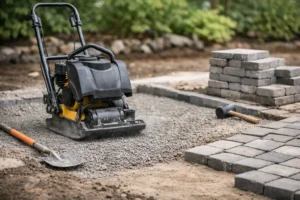
Reset the pavers in their original pattern, keeping joint spacing tight and consistent. Once they are in place, use a plate compactor with a protective pad to seat them evenly. Then sweep joint sand into the gaps and compact again if needed.
If the surrounding pavers have shifted, you may need to loosen a slightly larger area to create a smooth transition. Good repair work should feel level underfoot and look intentional, not patched.
When a simple repair is not enough
Sometimes the surface tells you the problem is bigger than one low section. If multiple areas are sinking, if pavers are separating along the edges, or if the entire field feels wavy, there may be a broader failure in the base system.
That is common in older installations or work that was installed quickly without proper excavation and compaction. It also happens when water is repeatedly entering from the perimeter. In those cases, localized repairs can become a cycle. You fix one spot, then another area drops a few months later.
A larger reset may be the better investment if the hardscape has widespread settling, poor drainage, or edge failure. Reusing the existing pavers is often possible, but the underlying support structure has to be corrected for the surface to perform the way it should.
Florida conditions change the repair strategy
In the Tampa Bay area, paver repair is not just about level surfaces. It is about how the installation handles moisture, heat, and changing ground conditions over time.
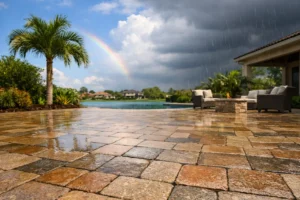
Heavy rain can wash out weak edges and expose shortcuts in the original base work. Sandy soils may drain quickly in some yards but shift more easily in others. Clay-heavy pockets can hold moisture longer and create unstable sections after storms. Pool decks and lanais also deal with regular splashing, deck runoff, and frequent foot traffic, which can accelerate movement in poorly supported areas.
That is why the repair approach should match the location. A driveway needs stronger support than a garden walkway. A patio corner near a roof discharge may need drainage correction, not just re-leveling. The best result comes from fixing the cause under the pavers, not just the surface above them.
Should you fix sinking pavers yourself or call a pro?
It depends on the size of the area, the cause of the settlement, and how comfortable you are with compaction and grading. A small settled section on a patio can be a manageable DIY repair if you have the right tools and the base is easy to access.
But if the sinking is in a driveway, near the home, around a pool, or tied to drainage issues, professional repair usually makes more sense. Those areas leave less room for error. Improper grade can send water toward the house, and weak compaction in a driveway repair can fail quickly under vehicle loads.
An experienced paver contractor can also spot issues that are easy to miss, such as edge restraint failure, undermining from runoff, or settlement caused by an earlier trench or utility repair. That diagnosis is often what determines whether the repair holds.
How to keep pavers from sinking again
The long-term fix comes down to three things: a stable base, proper compaction, and controlled water movement. If any one of those is missing, the repair may only be temporary.
Make sure water is directed away from the hardscape, especially near roof lines and yard low points. Keep an eye on edge areas where washout tends to begin. If you notice joints opening, pavers rocking, or a low spot forming after storms, address it early. Small movement is much easier to repair before it spreads.
For homeowners investing in outdoor spaces, this is where quality workmanship pays off. A well-built paver surface is not just attractive. It is engineered to stay level, drain correctly, and hold up through Florida weather.
If your pavers are sinking, treat it as a structural repair, not just a cosmetic touch-up. When the base is rebuilt correctly and the drainage is right, the surface can look better, feel safer, and last the way it was meant to. That is the standard Top Pavers believes outdoor hardscapes should meet from the start.