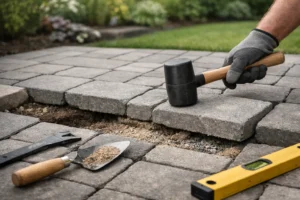

A paver patio or driveway can look perfect on day one and still fail a year later if the ground underneath was rushed. That is why base compaction for pavers matters so much. The surface gets the attention, but the real strength of any hardscape starts below the pavers, where excavation, grading, and compaction determine whether the finished project stays level and durable in Florida conditions.
For homeowners across the Tampa Bay area, this is not a small technical detail. It is the difference between a clean, long-lasting installation and a surface that starts shifting, dipping, or holding water after heavy rain. Good paver work is not just about choosing the right style or color. It is about building a foundation that can handle heat, storms, foot traffic, vehicle weight, and the movement that comes with local soil.
Why base compaction for pavers matters
Pavers are designed to work as a system. The pavers themselves are strong, but they rely on the layers below them to spread weight and resist movement. When the base is compacted properly, the load is distributed evenly and the surface remains stable over time. When the base is loose, uneven, or too thin, the problems usually show up fast.
You might see low spots in a patio after summer storms. A driveway might develop rutting where tires pass over the same area every day. Pool decks can start to feel uneven underfoot, which is not just unattractive but also a safety issue. In many cases, the pavers are not the root problem. The issue is the base underneath them.
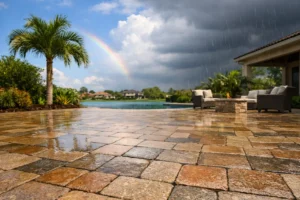
Compaction reduces air gaps in the base material and helps create a dense, stable layer. That stability matters even more in Florida, where intense rainfall can expose weak preparation quickly. Water will always find the path of least resistance. If the base was not graded and compacted correctly, that path can turn into washout, settlement, or standing water.
What a properly compacted paver base includes
A strong installation usually begins with excavation to the right depth for the project. That depth depends on how the space will be used. A walkway and a driveway do not need the same support. A patio for light foot traffic has different demands than an area supporting delivery vehicles or a large outdoor kitchen.
After excavation, the subgrade needs to be evaluated and compacted. This is the native soil layer below the base material. If that layer is soft or inconsistent, no amount of pavers on top will fix it. In some cases, extra stabilization is needed. In others, the issue is drainage, not just density.
From there, the base material is added in lifts, not dumped all at once and flattened at the top. This is one of the details that separates durable installation work from rushed work. Compacting in layers helps create consistent density throughout the base. If the material is too deep in one pass, the top may look firm while the lower section remains loose.
A bedding layer of sand is then screeded over the compacted base to help set and align the pavers. That sand is not there to make up for an uneven base. Its job is precision, not structural correction. If a contractor is trying to fix poor base preparation with extra sand, the surface will likely move later.
The biggest mistakes that cause paver failure
The most common mistake is underestimating the base. Some installations look fine because the pattern is clean and the cuts are sharp, but appearance can hide structural shortcuts for only so long. A thin base, poor compaction, or skipped drainage planning usually shows up after the first season of heavy use and weather.
Another issue is using the wrong equipment for the size of the project. Hand tamping may be acceptable for very small repairs or tight areas, but large patios, driveways, and pool decks require mechanical compaction to achieve reliable density. Even then, the operator needs to know how to compact evenly without overworking or shifting the material.
Moisture is another factor. Base material that is too dry or too wet can be difficult to compact properly. It is not just about running a plate compactor over crushed stone and calling it done. The crew needs to pay attention to site conditions, weather, soil behavior, and the intended use of the surface.
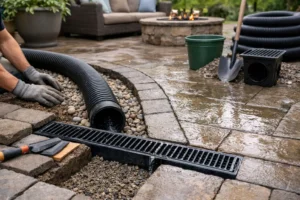
Then there is drainage. This is where many hardscape problems begin. A base can feel firm and still fail if water is directed toward the house, trapped beneath the surface, or allowed to erode edge areas. Proper slope and runoff planning are part of base preparation, not separate from it.
How Florida conditions change the job
In Tampa, Brandon, Clearwater, St. Petersburg, and surrounding areas, hardscape installation has to account for more than traffic load. It has to account for frequent rain, high groundwater in some locations, heat exposure, and soil conditions that vary from one property to the next. That means base compaction for pavers cannot be treated like a one-size-fits-all checklist.
A backyard in one neighborhood may have sandy soil that drains quickly but shifts easily if not prepared well. Another property may have denser soil with drainage challenges near the house or pool. Coastal exposure and storm patterns also matter. What works in a dry climate on firm ground may not hold up the same way in Florida.
This is why experienced site evaluation matters. The right installation plan looks at grade, runoff, use, and edge restraint together. It also considers whether the area is meant for entertaining, parking, or simply connecting spaces around the home. Each of those uses changes what the base needs to do.
How professionals approach paver base compaction
Professional installation is less about one magic material and more about process control. The crew needs to excavate to the proper depth, remove unstable material, establish grade, add the right base aggregate, and compact it in stages. They also need to check elevations throughout the job, because correcting mistakes early is far easier than rebuilding a settled surface later.
For driveways, compaction standards are typically more demanding because vehicle loads create repeated pressure in concentrated areas. For patios and walkways, drainage and long-term levelness are often the biggest concerns. Pool decks add another layer of importance because settlement near coping or transitions can affect both appearance and safety.
Edge restraints also play a role in protecting the compacted system. Even a well-built base can start losing integrity at the perimeter if edges are not secured. Pavers depend on lateral support to stay interlocked, especially in spaces with curves, transitions, or frequent traffic.
Top Pavers approaches base prep with the understanding that homeowners are not just paying for pavers. They are investing in a finished outdoor space that should hold its shape, drain properly, and stay attractive for years.
Signs a paver base was not compacted well
Sometimes the warning signs are obvious. The surface may dip, rock, or separate. Other times the issue is more subtle at first, like water lingering after rain or a slight ripple that seems cosmetic but grows over time.
If pavers begin shifting in specific paths, such as where cars drive or people walk most often, that usually points to weak support underneath. If joints keep opening up after re-sanding, or if one section settles while surrounding areas stay level, the problem is often below the surface rather than in the pavers themselves.
Repairs in these situations depend on how widespread the issue is. Small isolated settlement can sometimes be corrected by lifting and rebuilding a section. If the base failure is broad, a more complete rebuild may be the smarter long-term choice. It costs more upfront, but repeated patching over a weak foundation usually costs more in the end.
What homeowners should ask before hiring a paver contractor
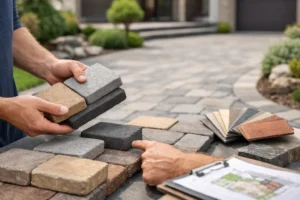
If you are comparing quotes, ask how the base will be built, not just what the finished pavers will look like. Ask about excavation depth, base material, compaction method, drainage slope, and whether the installation plan changes for a driveway versus a patio. These are practical questions, and a qualified contractor should be able to answer them clearly.
Price alone can be misleading. A low bid may reflect less excavation, less base material, or faster installation with fewer compaction passes. That can make the project cheaper on paper and more expensive after the first round of repairs. A higher-quality installation usually shows up in the parts of the job you do not see once the pavers are laid.
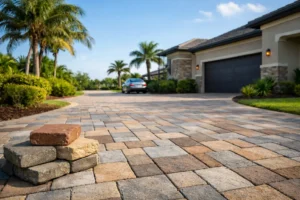
For homeowners who want curb appeal and long-term performance, that hidden work matters. The best paver projects are the ones that still look clean, level, and intentional years after installation, not just the day the crew leaves.
A beautiful outdoor space should feel solid every time you step on it. If the base is done right, the pavers above it have a real chance to stay that way.