A paver surface rarely fails all at once. More often, a driveway starts holding water near the garage, a walkway develops a low spot, or a few edge pavers begin to shift out of line. That is usually when homeowners start looking into brick paver repair services – not because the whole surface is ruined, but because small issues are starting to affect appearance, drainage, and safety.
In Tampa Bay, those issues tend to show up faster when heavy rain, heat, settling soil, and regular vehicle traffic all work against the surface over time. A paver driveway, patio, pool deck, or walkway can look solid from a distance and still have underlying problems in the base, joints, or edge restraint. Good repair work is not just about replacing a few bricks. It is about correcting the reason the movement happened in the first place.
What brick paver repair services actually cover
Many homeowners assume repair means swapping out cracked pieces and sweeping in new sand. Sometimes that is enough, but often the real fix goes deeper. Professional brick paver repair services can include lifting and relaying sunken sections, replacing broken or stained pavers, correcting drainage issues, resetting borders, rebuilding failed base areas, re-sanding joints, and compacting the surface so everything locks back together properly.
The scope depends on the type of damage and how long it has been there. A small trip hazard on a walkway may be a quick correction. A driveway with widespread rutting or soft spots may need partial reconstruction beneath the surface. The visible problem is only one part of the job.
That matters in Florida because water changes everything. When runoff is not moving where it should, the base can weaken, sand can wash out, and pavers begin to settle unevenly. If the repair only addresses the top layer, the same area often fails again.
Common signs your pavers need repair
Some warning signs are obvious. Others are easy to ignore until the repair becomes larger and more expensive.
A sinking section is one of the clearest indicators that the base has shifted or compacted unevenly. Loose pavers, widening joint lines, pooling water, raised edges, and weed growth through the joints also point to a surface that is no longer performing the way it should. On driveways, tire path depressions can show up where repeated weight has stressed a weak base. Around pools and patios, water collecting against the house or deck is a sign that slope and drainage need attention.
Cracks in individual pavers do not always mean the whole system is failing. Sometimes a few units were damaged by impact, wear, or prior installation issues. But when cracking appears alongside movement, separation, or standing water, it usually signals a larger structural problem.
Why pavers fail in the first place
Most paver problems come back to installation quality, drainage, or age. In many cases, it is a combination.
The most common cause is poor base preparation. If excavation was too shallow, the base material was not compacted correctly, or the wrong aggregate was used, the surface may look good initially and then begin settling as traffic and weather take their toll. Edge restraints are another frequent weak point. Once borders fail, pavers can begin spreading outward, which affects the entire field.
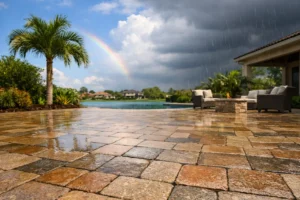
Drainage is another major factor in the Tampa Bay area. Frequent storms and saturated soils can wash out bedding sand or soften base layers. If water is directed toward the paved area instead of away from it, movement becomes much more likely. Tree roots, heavy vehicles on areas not built for that load, and years of deferred maintenance can also contribute.
There is also a difference between cosmetic wear and structural failure. Faded color, minor surface stains, or a few isolated chips may not require major work. Settlement, heaving, pooling water, and tripping hazards are different. Those affect performance and should be corrected before more of the surface is compromised.
When repair makes sense and when replacement is smarter
Not every damaged paver area needs a full replacement. One of the advantages of paver systems is that they can often be repaired in sections. If the issue is localized and the surrounding field is stable, targeted repair is usually the most practical option. That keeps costs focused on the problem area while preserving the rest of the installation.
But there are situations where broader replacement is the better investment. If a large percentage of the surface has settled, if drainage is wrong across the entire area, or if the original installation lacks proper base depth throughout, patching one section after another can become inefficient. A repair should solve a problem, not postpone the same call for six more months.
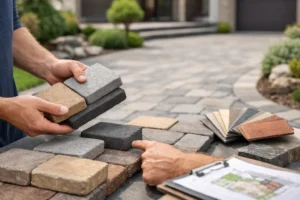
Matching existing pavers also plays a role. If the original product is discontinued or heavily faded, replacing a few sections may create a noticeable mismatch. Some homeowners are fine with that. Others would rather update the full area for a more consistent finish. It depends on budget, goals, and how visible the repair will be.
How professional brick paver repair services are done right
A reliable repair process starts with diagnosis, not guesswork. The damaged section needs to be evaluated for surface movement, edge stability, drainage pattern, and base condition. Without that step, repairs can end up treating symptoms instead of causes.
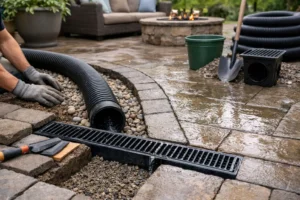
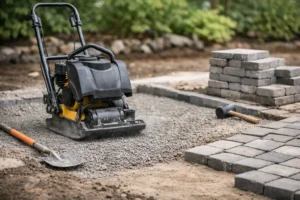
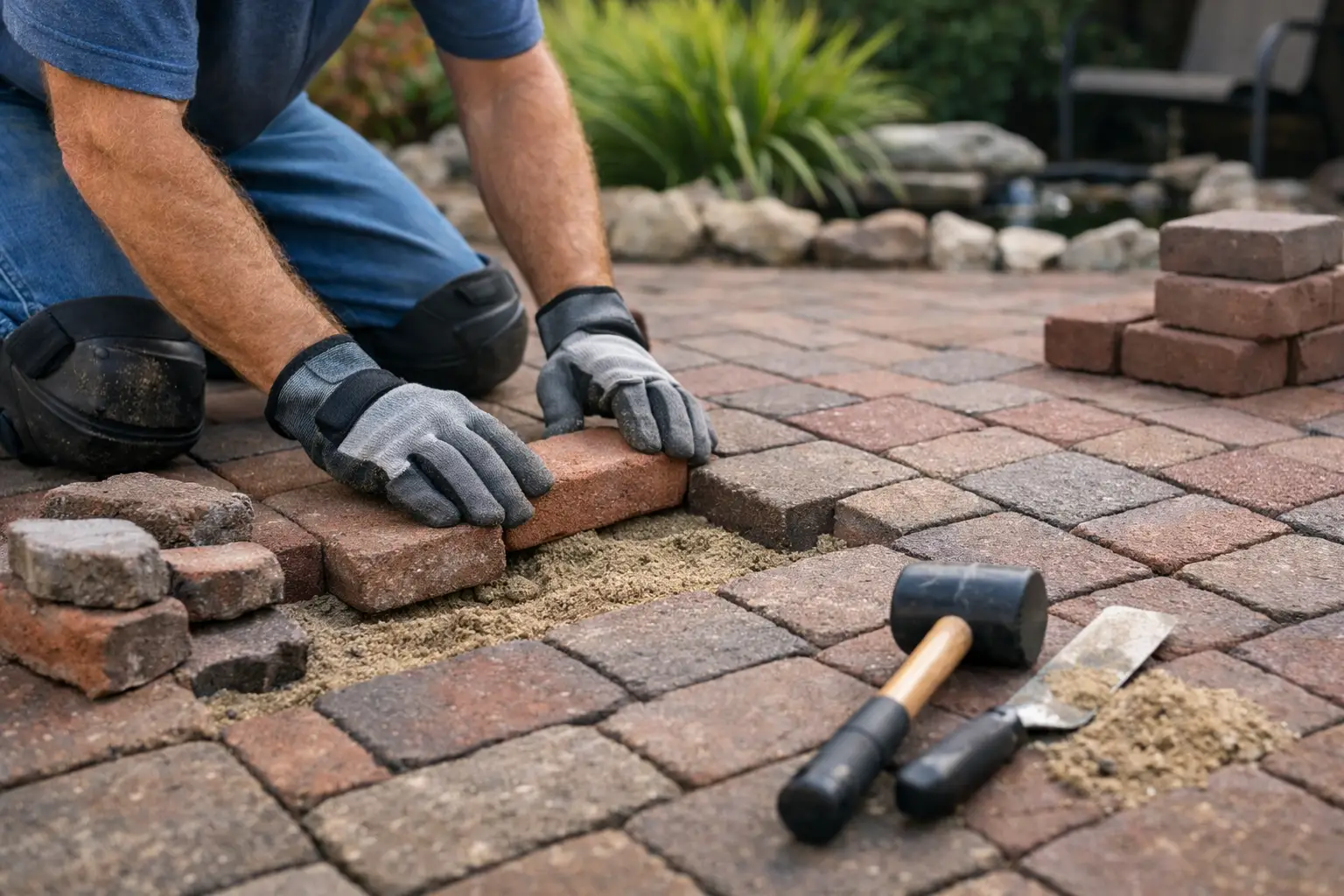
Once the issue is identified, the affected pavers are carefully removed so usable units can be reset whenever possible. The crew then addresses the underlying problem, which may mean regrading the area, rebuilding the base, improving compaction, or correcting the edge restraint. If drainage is part of the failure, slope adjustments or runoff management should be built into the repair.
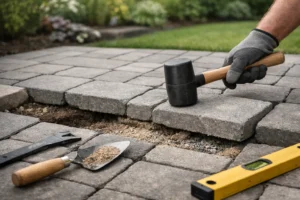
After the base is corrected, pavers are reinstalled with proper spacing and alignment. Fresh joint sand is swept into place, and the area is compacted to lock the system together. The final result should not just look straighter and cleaner. It should feel solid underfoot and shed water properly.
That process is what separates lasting repair from a quick surface fix. A professional crew understands that paver performance depends on what is underneath just as much as what you see on top.
Why local experience matters in Florida
Brick paver repair in Florida is not the same as repair in a drier climate. High rainfall, sandy soils, humidity, salt exposure in coastal areas, and strong sun all affect how outdoor surfaces age. A repair approach that ignores those conditions may look fine at first and fail early.
That is why homeowners benefit from working with a contractor who understands local drainage challenges, proper base preparation for Florida conditions, and the traffic demands of driveways, patios, and pool decks in this region. Licensed and insured service matters too. It gives homeowners confidence that the work will be handled professionally, safely, and with accountability from estimate through cleanup.
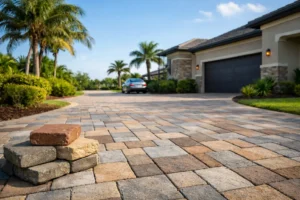
For many properties in places like Tampa, Riverview, Clearwater, and St. Petersburg, repairs also need to protect curb appeal. Paver surfaces are highly visible. When they are uneven, stained, or patched poorly, they stand out right away. Well-executed repair restores both function and appearance, which is exactly what most homeowners want.
Choosing a contractor for brick paver repair services
Not every hardscape contractor approaches repair with the same level of care. Some focus on cosmetic touch-ups. Others take the time to inspect drainage, excavation depth, and compaction before recommending a solution. That difference matters.
When comparing brick paver repair services, ask how the problem will be diagnosed, whether the crew will inspect the base, how matching materials will be handled, and what steps will be taken to prevent the issue from returning. A reputable company should be clear about whether a repair is likely to hold or whether a broader rebuild is the more honest recommendation.
It also helps to choose a team that handles both design-focused installations and technical repair work. That combination usually means they understand how the finished surface should look and how it needs to perform underneath. Top Pavers approaches repairs with that same mindset – clean execution, proper grading, strong base work, and results built for Florida conditions.
If your pavers are shifting, sinking, or starting to hold water, waiting rarely improves the situation. The right repair at the right time can protect the rest of the surface, improve safety, and bring your outdoor space back to the standard your home deserves.