A driveway in Tampa Bay has a harder job than most. It has to look sharp from the street, carry daily vehicle weight, shed heavy rain, handle heat, and keep doing all of that without shifting, cracking, or turning into a drainage problem. That is why choosing the best pavers for driveways is less about what looks good in a showroom and more about what performs well year after year in Florida conditions.
For most homeowners, the right choice comes down to three things: strength, surface texture, and installation quality. Color and pattern matter too, of course, but a beautiful driveway only stays beautiful when the base, grading, edge restraint, and compaction are done correctly. Material choice is important. Proper construction is what makes that choice last.
What makes the best pavers for driveways?
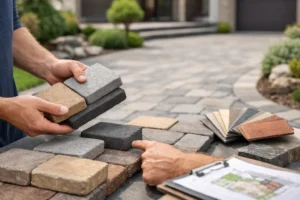
Not every paver is built for vehicle traffic. Some products are better suited to patios, pool decks, or walkways, where they do not need to handle the same repeated weight loads. For a driveway, you want pavers that are specifically rated for vehicular use, dense enough to resist wear, and thick enough to maintain structural integrity over time.
In practical terms, the best driveway pavers usually have a strong compressive rating, a consistent shape for tight interlock, and a surface that offers traction without being overly rough. In Florida, they also need to perform well through cycles of intense sun, sudden downpours, and standing moisture if drainage is poor. That last part matters more than many homeowners realize. Even premium pavers can fail early if water is allowed to sit under the surface or wash out the base.
Concrete pavers are the most common choice
For many homes, concrete pavers are the best balance of durability, design flexibility, and cost. They are widely used for residential driveways because they are engineered for strength, available in many styles, and easier to repair than a poured concrete slab. If one area gets stained or damaged, individual pavers can be removed and replaced without redoing the whole driveway.
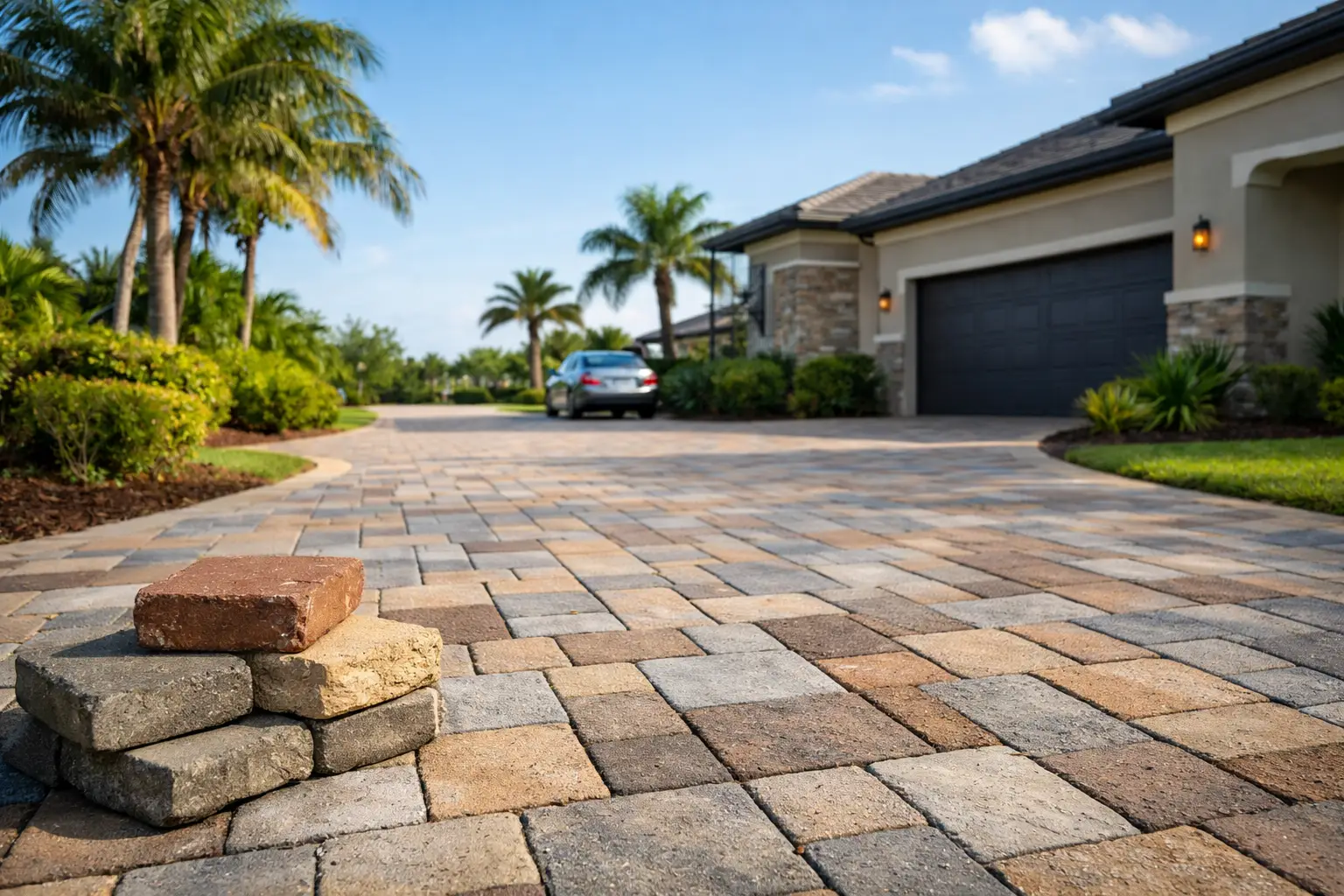
Concrete pavers also give homeowners more control over the finished look. You can choose traditional shapes, larger format styles, tumbled finishes, or cleaner contemporary lines depending on the house. Color blends are especially useful in Florida because they hide dust, tire marks, and everyday wear better than flat solid tones.
That said, concrete pavers are not all equal. Lower-grade products can fade faster or vary in density. A driveway should use pavers designed for that application, not thinner units intended for foot traffic. This is where contractor guidance matters. The product may look similar on the pallet, but performance can be very different once cars are parked on it every day.
Brick pavers have classic appeal, with some trade-offs
Brick pavers remain popular for homeowners who want a timeless, established look. They pair well with traditional architecture and can add warmth that concrete sometimes does not. In the right setting, a brick driveway has a strong visual impact and excellent curb appeal.
But brick comes with trade-offs. It may be more limited in color range, and depending on the product, it can be more vulnerable to surface wear or chipping than high-quality concrete pavers. Some brick surfaces also show staining differently. For homeowners focused on a classic style first and foremost, brick can still be an excellent choice. For those prioritizing a wide design range and easier matching across other outdoor features, concrete usually offers more flexibility.
Natural stone can look exceptional, but it is not always the practical winner
Natural stone pavers can create a premium, high-end driveway. Travertine, granite, and certain dense stones offer a distinctive look that stands apart from manufactured products. On custom homes, that can be a major advantage.
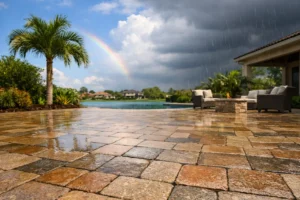
Still, stone is not automatically the best material for every driveway. Cost is usually higher, and some stones are better suited for patios or pool decks than vehicle-bearing surfaces. Surface finish matters as well. A stone that looks elegant when dry may become slick in rain if the finish is too smooth. Florida homeowners often love the appearance of natural stone, but for many driveways, a quality concrete paver provides a better mix of performance, maintenance, and budget control.
Thickness and interlock matter more than people think
If you are comparing the best pavers for driveways, thickness should be one of the first questions. Driveway pavers are generally thicker than patio pavers because they need to distribute vehicle loads across the surface and into the base below. The interlocking pattern matters too.
A strong pattern like herringbone is often preferred for driveways because it helps resist movement under turning tires and braking. Running bond or stack patterns may look clean, but they are not always the best structural choice for areas with regular vehicle traffic. This is one of those places where design and engineering need to work together. A driveway should not just match the home. It should be built for how it will be used.
The base is what really determines lifespan
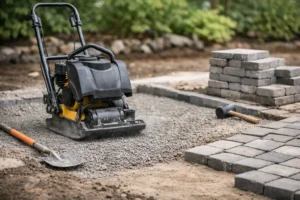
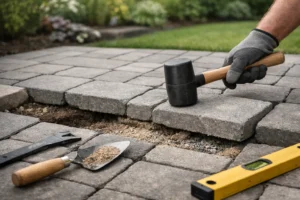
Homeowners often focus on the visible surface, but the real strength of a paver driveway starts below grade. Proper excavation, compaction, and base preparation are what keep pavers from settling unevenly, developing low spots, or allowing water to collect where it should not.
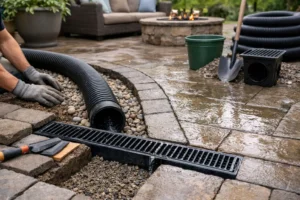
In the Tampa Bay area, base work and drainage are especially important. Sudden storms can expose weak installation quickly. If the subgrade is not prepared correctly, or if water has no clear path away from the driveway, problems tend to show up sooner rather than later. That can mean shifting pavers, washed-out joints, edge failure, or pooling near the garage.
A professionally built system accounts for slope, runoff, compaction, and edge restraint from the start. This is one reason paver driveways often outperform basic slab installations over time. When installed correctly, they allow for flexibility, repairability, and better long-term surface performance.
Color and finish should match Florida living
Lighter colors are often a smart choice for Florida homes because they stay cooler under sun exposure and tend to complement coastal and suburban architecture. Blended tones also help disguise normal dirt and leaf tannins better than very dark or very uniform colors.
Texture matters too. A driveway should provide good traction in wet weather without feeling harsh underfoot. Many homeowners want the same material family to connect the driveway with walkways, entry steps, or a front patio. That can create a more finished, cohesive appearance across the property.
The best design choices are usually the ones that still look good after real life happens. Cars drip fluids. Rain splashes mulch. Trees shed debris. A stylish paver is only a good driveway choice if it still works visually under everyday conditions.
Maintenance is manageable, but not zero
One reason pavers are so appealing is that maintenance is generally straightforward. Routine sweeping, occasional rinsing, and periodic joint sand maintenance can go a long way. Sealing may also help with color enhancement and stain resistance, depending on the product and the homeowner’s goals.
Still, it is better to think of pavers as low-maintenance rather than no-maintenance. Weeds can emerge if joints are neglected. Surface staining can happen if spills sit too long. And if a driveway was installed poorly, maintenance will not fix underlying structural issues. The good news is that a well-built paver driveway is easier to service and repair than many hardscape alternatives.
So what are the best pavers for driveways?
For most residential properties, high-quality concrete interlocking pavers rated for vehicular use are the strongest all-around choice. They offer durability, design options, easier repairs, and strong performance when paired with the right base and drainage plan. Brick can be an excellent fit for classic homes, while natural stone is often best reserved for projects where premium appearance outweighs budget considerations.
The better question, really, is not just which paver is best. It is which paver is best for your home, your traffic, your drainage conditions, and your design goals. In that sense, the right answer is rarely off-the-shelf. It comes from matching the material to the property and installing it with care.
A driveway is one of the first things people see and one of the hardest-working surfaces on your property. When it is built with the right paver, the right pattern, and the right foundation, it does more than improve curb appeal. It gives you a cleaner arrival, more confidence in heavy weather, and a finished look that feels right every time you pull in. That is the kind of upgrade worth doing once and doing well.