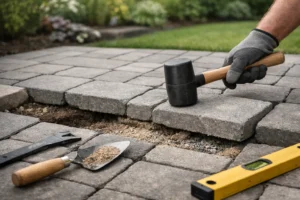

A driveway that looks great in March can start showing problems by August if it was built for the wrong climate. That is why homeowners across Tampa Bay keep asking the same practical question: are pavers good for Florida weather? In most cases, yes – but the real answer depends on the material, the installation quality, and how well the project is planned for heat, rain, drainage, and ground movement.
Florida is not gentle on outdoor surfaces. Long stretches of sun, sudden downpours, humidity, shifting soil, and storm season all put pressure on driveways, patios, walkways, and pool decks. A surface that performs well up north or in drier climates may not hold up the same way here. Pavers tend to do well because they are flexible as a system, not just strong as an individual material.
Why pavers perform well in Florida
Concrete pavers and brick-style paver systems are a strong fit for Florida because they are installed as interlocking units over a compacted base rather than poured as one large slab. That matters when the ground expands, contracts, or settles. Instead of forcing the entire surface to act as one rigid piece, pavers allow slight movement across many joints.
That flexibility helps in a climate where heavy rain can saturate soil and heat can put constant stress on outdoor materials. A traditional poured concrete slab is more likely to crack visibly when the base shifts or water starts creating weak spots underneath. With pavers, individual units can often be adjusted or replaced without tearing out the whole area.
For homeowners, that translates into two things that matter right away: better long-term appearance and more manageable repairs. A driveway, patio, or pool deck can take daily use, strong sun, and seasonal storms without looking tired as quickly.
Are pavers good for Florida weather in heat and sun?
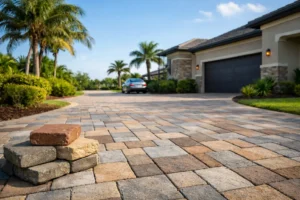
Florida sun is intense, especially on open driveways, pool decks, and back patios with little shade. Pavers generally hold up very well under UV exposure. Their color tends to remain more stable than painted or coated surfaces, especially when quality materials are used and the installation is done correctly.
Surface temperature is a more nuanced issue. Any hardscape material can get hot in direct sun. Dark pavers usually absorb more heat than lighter ones, so color choice matters. For pool areas and barefoot traffic, lighter tones often make more sense because they stay more comfortable during the hottest part of the day.
Texture matters too. A smoother paver may feel cleaner and more modern, while a textured finish can improve traction around wet areas. The best option depends on where the surface is going and how it will be used.
Heavy rain, drainage, and storm season
If there is one reason pavers make sense in Florida, it is water management. Afternoon storms can drop a lot of rain fast, and poor drainage shows up immediately. Water pooling on a driveway or patio is not just annoying. It can shorten the life of the surface, create slip hazards, and lead to erosion around the edges.
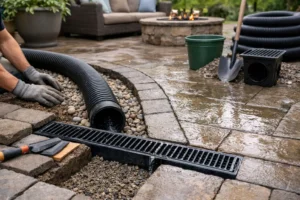
A properly installed paver system gives contractors more control over slope, grading, and runoff. The finished surface can be shaped to guide water away from the home and toward appropriate drainage paths. The joints between pavers also help the system respond better than a monolithic slab when water pressure builds under the surface.
That said, pavers are not magic. If the excavation is shallow, the base is weak, or the grading is off, even the best-looking pavers can fail. In Florida, the performance of the installation under the surface matters just as much as the pattern you see on top.
Florida soil movement is where installation quality counts
Many areas around Tampa, Brandon, Riverview, Clearwater, and St. Petersburg deal with sandy soils, variable drainage, and movement over time. That movement is one of the biggest reasons homeowners see cracked concrete, uneven walkways, and sunken sections near driveways and pool decks.
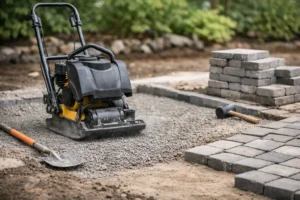
Pavers handle this better than many surfaces because they are built in layers. A well-prepared installation includes excavation, compacted base material, proper edge restraint, bedding sand, precise laying patterns, and final compaction. Each part supports the one above it.
When that system is built correctly, it can absorb minor shifts more gracefully than poured concrete. And if one area settles, repairs are often more targeted. Instead of demolishing a large section, the affected pavers can be lifted, the base corrected, and the same or matching units reinstalled.
That repairability is a real advantage in Florida, where outdoor surfaces often need to adapt to site conditions rather than fight them.
Pool decks, patios, and driveways each have different needs
Not every paver project faces the same conditions. A driveway needs to carry vehicle weight and resist rutting at turning points. A patio is more about drainage, comfort, and appearance. A pool deck has to balance heat, slip resistance, and water runoff.
That is why the question are pavers good for Florida weather should really be followed by another one: good for which part of your property?
For driveways, thicker pavers and a stronger base are usually the right move. Florida rain can weaken poorly built surfaces fast, especially where tires repeatedly load the same area. For patios, the focus may shift more toward design, layout, and creating a level entertaining space that still drains properly. For pool decks, color and texture choices become even more important because comfort and traction matter every day.
The material can be a great fit across all three, but the build strategy should match the use.
Low maintenance, with a few realistic expectations
One reason homeowners like pavers is that they are relatively low maintenance for the value they add. They do not need constant upkeep, and they usually age better visually than plain concrete. If one paver stains or chips, it can often be replaced without redoing the whole surface.
Still, low maintenance does not mean no maintenance. In Florida, you should expect some routine care. Joint sand may need refreshing over time, especially after heavy rains or cleaning. Sealing can help preserve color and reduce staining in some applications, though not every project requires it. Regular cleaning also helps prevent buildup from mildew, leaves, and organic debris in shady or damp areas.
The good news is that routine upkeep is usually straightforward, especially compared with the cost and disruption of repairing cracked slabs.
When pavers may not be the right choice
Pavers are a strong option for Florida, but there are cases where expectations need to be clear. If a homeowner wants the absolute lowest upfront cost and is comparing only initial installation numbers, poured concrete may look cheaper at first. The trade-off is often seen later in cracking, repairs, or appearance.
Another factor is workmanship. Poorly installed pavers can shift, separate, or develop drainage issues. That is not a material problem as much as an installation problem. In Florida, cutting corners on excavation, compaction, or slope usually gets exposed quickly.
There is also the design side. Not every property needs an elaborate pattern or premium finish. The right paver project should fit the home, the budget, and the way the space is actually used. Good contractors help homeowners avoid overbuilding just as much as underbuilding.
What Tampa Bay homeowners should look for
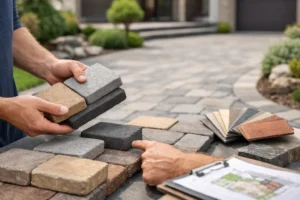
If you are planning a hardscape project in this region, focus less on the sales pitch and more on the build process. Ask how the area will be excavated, how the base will be compacted, how drainage will be handled, and what paver thickness is recommended for the intended use. Those answers tell you more than a sample board ever will.
A contractor with real Florida experience should also be able to explain how the installation will perform through heat, storm season, and normal ground movement. That local knowledge matters. A beautiful patio is only a good investment if it still performs after years of weather exposure.
At Top Pavers, that is where craftsmanship makes the difference – building outdoor spaces that look finished on day one and stay dependable long after the crew leaves.
For most homes in Florida, pavers are not just a good-looking choice. They are a practical one. When the base is prepared correctly, the drainage is planned properly, and the material is matched to the space, pavers give homeowners something every outdoor surface should offer in this climate: strength without stiffness, beauty without fragility, and a finish that is built for real weather, not just sunny photos.