A driveway has to do more than look good from the street. In Florida, it has to handle heat, heavy rain, shifting ground, daily traffic, and the kind of curb appeal that still matters when you pull in after a long day. If you are weighing a pavers vs concrete driveway decision, the right choice depends on what you value most: lower upfront cost, long-term flexibility, custom design, or easier repairs.
For many Tampa Bay homeowners, this is not just a material question. It is an investment question. You want something that fits the home, performs well in our climate, and does not turn into a maintenance headache a few years down the road.
Pavers vs Concrete Driveway: The real difference
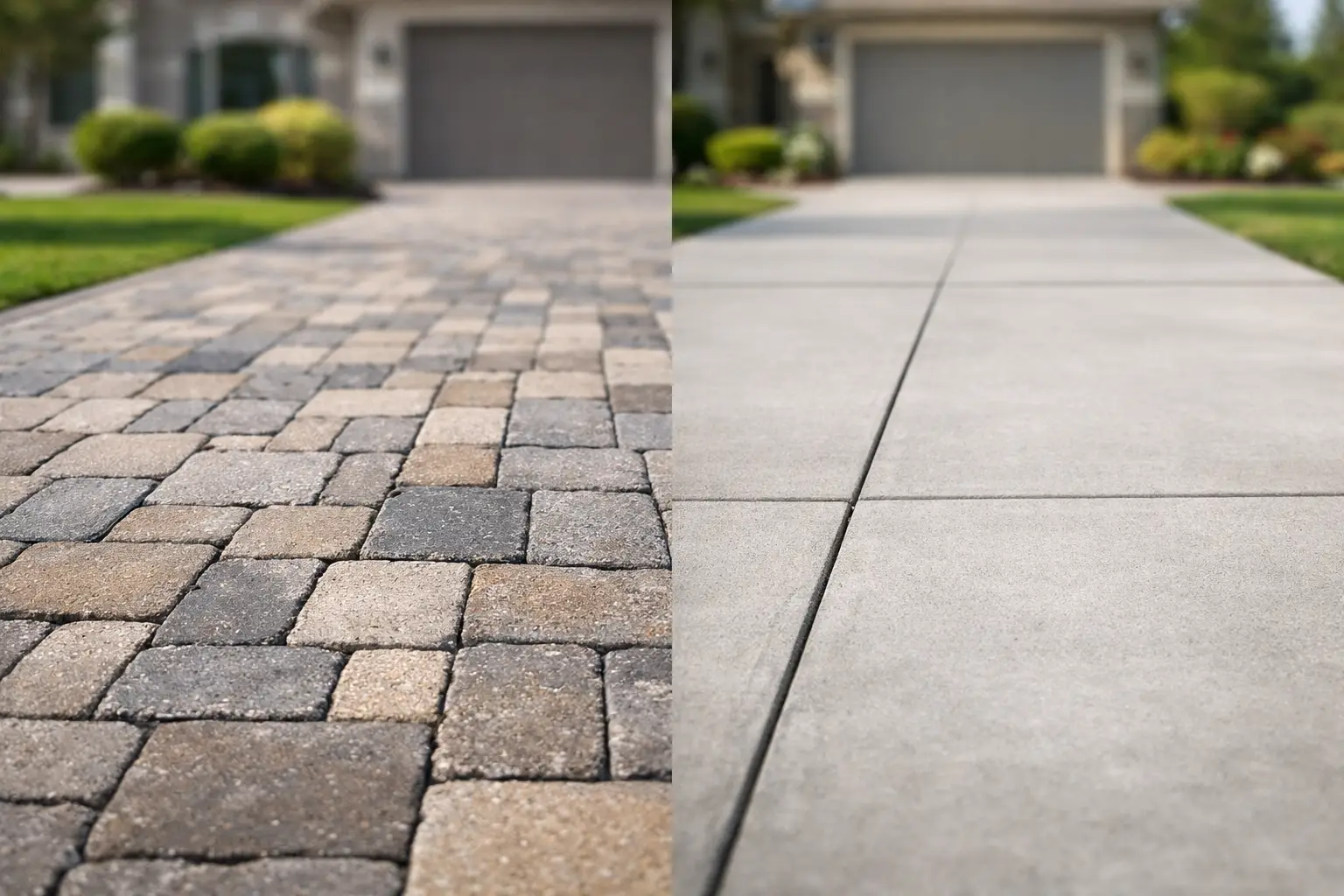
Concrete is typically poured as one continuous slab. It creates a clean, simple surface and usually costs less upfront. That lower starting price is why many homeowners consider it first, especially for basic new builds or straightforward replacements.
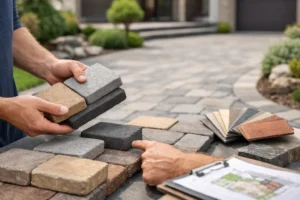
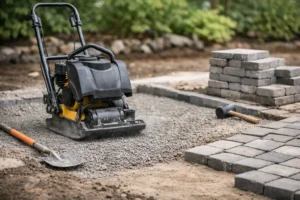
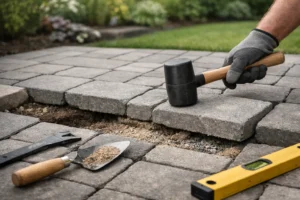
Pavers are individual units installed over a properly prepared base with sand, edge restraints, and joint material. The result is a segmented surface rather than one large slab. That difference in construction affects almost everything that follows, from appearance to drainage behavior to repair options.
On the surface, both can function as a driveway. The bigger question is how each one ages under Florida conditions.
Appearance and curb appeal
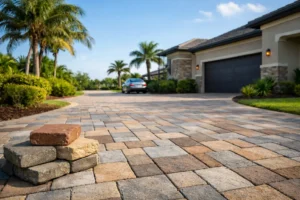
This is where pavers usually pull ahead. A paver driveway gives you more control over color, pattern, texture, border details, and overall style. Whether the home is coastal, traditional, modern, or Mediterranean, pavers make it easier to create a finished look that feels intentional rather than purely functional.
Concrete is more limited. Even when it is decorative, stamped, or colored, it still tends to read as one broad slab. That can work on some properties, especially if the goal is a simple, understated surface. But if curb appeal is a priority, pavers generally offer more character and a higher-end appearance.
For homeowners in places like Tampa, Clearwater, Riverview, and St. Petersburg, where exterior presentation often matters just as much as interior upgrades, that visual difference can carry real weight.
Durability in Florida weather
Florida is hard on hardscapes. Heat bakes surfaces for months. Summer storms test drainage. Soil movement can create settling issues over time. That is why installation quality matters as much as the material itself.
Concrete can be strong, but it is still one rigid slab. When the ground shifts or the slab experiences stress, it tends to crack. Some cracks stay cosmetic. Others become more noticeable and can spread. Once that happens, repairs are rarely invisible.
Pavers have a built-in advantage here because they are made up of interlocking pieces. A properly installed paver driveway has some flexibility, which helps it accommodate minor ground movement better than a large poured slab. That does not mean pavers are immune to problems. Poor base preparation can still lead to settling or uneven areas. But when excavation, grading, compaction, and drainage are handled correctly, pavers tend to perform very well in Florida conditions.
Repairs and long-term maintenance
This is one of the clearest differences in the pavers vs concrete driveway debate.
When concrete cracks, stains deeply, or settles unevenly, repairs can be difficult to blend. Patching often looks like patching. In some cases, the most practical fix is replacing an entire section, which can be costly and disruptive.
With pavers, an isolated issue is usually easier to address. If a section settles or a few units are damaged, those pavers can be lifted, the base corrected, and the area reinstalled without redoing the whole driveway. That repairability matters over time, especially on active residential properties.
Maintenance is different, too. Concrete may need periodic cleaning and sealing depending on the finish. Pavers also benefit from sealing, especially if you want enhanced color and added stain resistance, but sealing is optional in many cases. Joint sand may need refreshing over time, and weeds can appear if maintenance is neglected, though that is usually manageable with proper installation and care.
Upfront cost vs long-term value
If budget is the main driver, concrete often wins on initial cost. A standard concrete driveway is usually less expensive to install than a paver driveway. For homeowners looking for the lowest entry price, that can be appealing.
But upfront price is not the same as value. A driveway is not a short-term feature. It is part of the home’s first impression, daily function, and future upkeep. Pavers usually cost more at the beginning, but they also tend to deliver more in visual impact, customization, and repair flexibility.
In neighborhoods where appearance and resale matter, that added value can make sense. Buyers notice driveways. They notice when the entry to a home feels upgraded and professionally designed. A well-installed paver driveway often supports that impression better than a plain concrete slab.
This is where it really becomes an it-depends decision. If your goal is the most affordable way to replace a damaged driveway, concrete may be enough. If your goal is a durable, design-forward surface that elevates the whole front of the property, pavers are often the stronger investment.
Drainage and surface performance
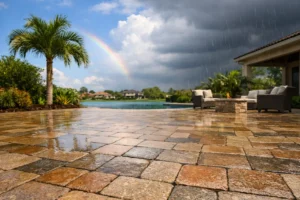
Drainage should never be an afterthought in Tampa Bay. Sudden downpours can expose every grading mistake fast.
Concrete driveways rely heavily on proper slope because the surface itself is largely impermeable. If the grading is off, water can collect, run toward the garage, or create low spots where staining and wear become more obvious.
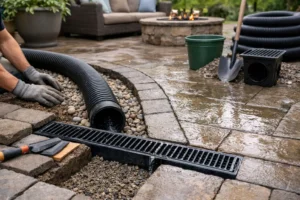
Paver driveways also require proper grading, but their jointed system can help water move differently across the surface. In many cases, they offer a more forgiving surface when paired with correct base work and drainage planning. That said, neither material performs well if installed over a weak or poorly compacted foundation.
This is why the contractor matters so much. The visible surface gets attention, but the real performance starts below it. Excavation depth, base material, compaction, edge restraint, and water management all affect whether the driveway stays attractive and stable.
Which option fits your home?
A concrete driveway makes sense when you want a functional surface at a lower upfront cost and you are comfortable with a more basic appearance. It can be the right choice for simple projects, tighter budgets, or properties where design customization is not a major priority.
A paver driveway makes more sense when you want stronger curb appeal, more design flexibility, easier spot repairs, and a surface better suited to Florida’s shifting conditions. For many homeowners upgrading an older driveway or investing in a higher-value exterior, pavers feel less like a utility surface and more like part of the home’s overall design.
That is especially true if the driveway connects visually with walkways, patios, pool decks, or entry stairs. Pavers create continuity in a way concrete usually does not. The finished result looks more complete, not pieced together over time.
Pavers vs concrete driveway for Tampa Bay homes
In this region, climate and presentation both matter. Homes in Brandon, Valrico, Pasco, Pinellas, and surrounding areas deal with intense sun, seasonal rain, and the need for exterior materials that can hold up without looking tired too soon.
That is one reason many local homeowners lean toward pavers despite the higher initial investment. They want a driveway that looks custom, handles wear well, and can be repaired without replacing everything. When installed by a crew that takes base prep, drainage, alignment, and cleanup seriously, pavers offer a level of finish and durability that stands out.
At Top Pavers, that is exactly how we approach driveway work – not just as surface installation, but as a structural and visual upgrade built to perform in Florida.
What should you ask before deciding?
Before choosing either material, ask how long you plan to stay in the home, how important curb appeal is to you, what your budget looks like now versus later, and whether you want a driveway that can be repaired in sections if needed. Also ask who is doing the installation and what their process looks like below the surface.
A great-looking driveway can still fail if the groundwork is rushed. A more expensive material can still disappoint if drainage is ignored. On the other hand, the right installation can make either option perform better and last longer.
The best driveway choice is the one that fits your priorities and is installed with care. If you are choosing between pavers and concrete, look past the initial price tag and picture how that surface will look, feel, and hold up years from now. That is usually where the right answer becomes clear.