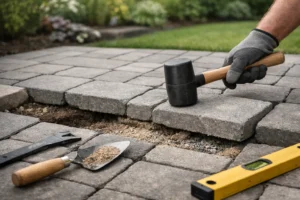

A patio can look finished on day one and still fail within a year if the base work is rushed. That is why patio paver installation instructions matter so much. The visible surface gets the attention, but the long-term performance comes from excavation depth, base compaction, drainage planning, edge restraint, and careful setting.
For homeowners in the Tampa Bay area, that matters even more. Florida heat, heavy rain, shifting moisture, and regular outdoor use put pressure on every layer below the pavers. A clean pattern and attractive color help with curb appeal, but a patio that stays level, drains well, and holds its joints is what actually protects your investment.
What good patio paver installation instructions should cover
A reliable installation process is not just about placing pavers in straight lines. It starts with the soil, moves through grading and compaction, and ends with joint stabilization and cleanup. If any of those steps are skipped or shortened, the patio may develop low spots, loose edges, standing water, or movement over time.
The right method also depends on the project. A small backyard sitting area may need a simpler layout than a large entertainment patio with steps, retaining walls, or a covered pergola nearby. Clay-heavy soil, poor drainage, and tree roots can also change the approach. Good instructions are precise, but they also allow for site-specific decisions.
Step-by-step patio paver installation instructions
1. Mark the layout and plan for drainage
Before excavation begins, the patio footprint should be clearly marked. This is the stage where shape, border details, finished height, and transition points are finalized. It is also where drainage is decided.
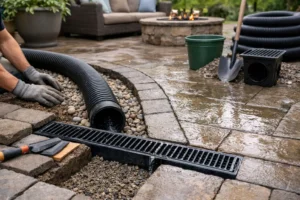
A patio should slope away from the home so water does not collect near the foundation or run back toward doors. In many cases, a gentle pitch is enough, but larger patios or low-lying yards may need more drainage planning. This is one of the most common reasons a patio that looks great at install ends up disappointing later.
2. Excavate to the proper depth
Excavation is not a cosmetic step. It creates room for the base, bedding layer, and pavers while removing unstable material that can shift later. The required depth depends on the paver thickness, soil conditions, and intended use.
For a standard residential patio, the excavation has to be deep enough to support the full system, not just the pavers themselves. In Florida, that often means paying close attention to sandy soils and moisture changes. If soft spots are left in place, they can create settling even when the surface initially looks flat.
3. Install and compact the base in lifts
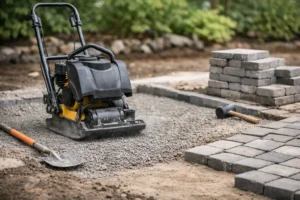
The base is the structural core of the patio. This layer is typically made of compactable aggregate placed in multiple lifts, with each layer compacted before the next goes in. Trying to install the entire base at once is faster, but it does not produce the same strength.
Proper compaction helps prevent movement, rutting, and uneven settling. It also supports drainage and gives the patio a more stable feel underfoot. This is where experienced crews separate themselves from rushed installations. If the base is weak, the patio is weak.
4. Screed the bedding layer carefully
Once the base is fully compacted and graded, a bedding layer is added and screeded smooth. This layer helps set the pavers evenly, but it is not there to fix poor base preparation. That is a costly misunderstanding.
If installers use the bedding sand to correct dips and humps underneath, those problems usually return to the surface. The better approach is simple: get the base right first, then use the bedding layer only for final setting consistency.
5. Lay the pavers in the planned pattern
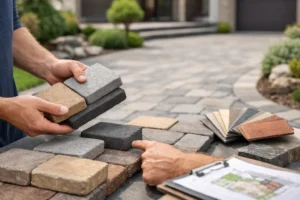
With the surface prepared, the pavers can be placed according to the selected pattern. Running bond, herringbone, and modular layouts all have different visual effects and performance characteristics. For patios, the choice often comes down to style, border design, and how the space connects to the home and landscape.
Spacing should remain consistent, and cuts should be clean around edges, columns, drains, or steps. This stage is where design becomes visible, but precision still matters as much as appearance. Small alignment errors tend to multiply across the field if they are not corrected early.
6. Add edge restraints
Edge restraint is one of the most overlooked parts of patio paver installation instructions. Without it, pavers at the perimeter can spread outward over time, especially with frequent foot traffic, rain, and seasonal ground movement.
A secure edge restraint helps the whole system stay locked together. The exact type depends on the patio design and border condition, but the goal is always the same – hold the shape and protect the field from shifting.
7. Compact the surface and fill the joints
After the pavers are in place, the surface is compacted to help seat them into the bedding layer. Joint material is then swept into the gaps and compacted again to lock the units together. This step helps reduce movement, limits weed intrusion, and supports overall stability.
Many homeowners focus on the pavers they can see and underestimate the role of joint sand. In reality, those joints are part of what makes an interlocking system perform correctly. If they are left underfilled or wash out too easily, the patio can loosen faster than expected.
8. Final cleanup and inspection
A professional installation should end with more than a finished patio. The site should be cleaned, transitions should be checked, drainage should be confirmed, and the surface should be inspected for consistent alignment and elevation.
This final review is also the right time to address maintenance expectations. Even a well-built patio benefits from occasional joint sand touch-up, surface cleaning, and prompt attention to isolated movement if it ever appears.
Where DIY patio projects usually go wrong
Most patio failures do not come from the paver product itself. They come from installation shortcuts. Shallow excavation, weak compaction, poor drainage, and missing edge restraint are some of the biggest issues. A patio may still look acceptable right after completion, which is why these mistakes are easy to miss at first.
Another common problem is underestimating site conditions. A yard that holds water after summer storms or slopes toward the home needs more than a basic install plan. The same is true for patios built near pools, screen enclosures, or outdoor kitchens where elevations have to work with existing structures.
There is also the question of tools and labor. Installing pavers correctly takes compaction equipment, saw cutting, layout accuracy, material staging, and a crew that knows how to keep each layer consistent. DIY can make sense for small, simple projects, but larger patios or drainage-sensitive areas usually benefit from experienced installation.
Why Florida conditions change the installation standard
Patio work in Tampa, Clearwater, St. Petersburg, Brandon, and nearby communities is not the same as patio work in milder or drier regions. Florida weather brings intense sun, hard rain, humidity, and fast-changing ground moisture. That combination can expose weak base preparation quickly.
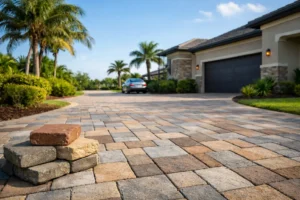
A well-built patio in this climate needs more than visual appeal. It needs proper slope, durable edge support, and a base system compacted for long-term performance. Materials matter, but workmanship matters more. That is one reason many homeowners choose a licensed and insured local company with a process built around drainage, compaction, and clean execution.
Top Pavers approaches patio installations with that full-system mindset because the goal is not just a better-looking backyard. It is a patio that stays attractive, functional, and structurally sound through daily use and Florida weather.
How to judge the quality of a patio installation plan
If you are comparing quotes or reviewing a contractor’s process, ask how excavation depth is determined, how the base is compacted, how water will drain, and what will be used to secure the edges. Those answers reveal a lot. A serious installer will explain the structural work clearly, not just the paver color and pattern.
It also helps to ask about cleanup, timeline, and how the finished patio will transition into nearby walkways, pool decks, or lawn areas. A good project feels intentional from start to finish. The strongest results come from crews that care about both the finished look and the hidden layers underneath.
A patio should give you a space that feels easy to enjoy, not a surface you have to worry about after every heavy rain. When the installation is handled correctly from the ground up, that peace of mind becomes part of the project too.