A patio quote can look straightforward at first glance – square footage, pavers, labor, done. In reality, patio paver installation cost depends on what happens before the first stone is ever set. For Tampa Bay homeowners, the biggest price differences usually come down to site conditions, drainage planning, base preparation, material selection, and the level of finish you want when the project is complete.
That matters because a patio is not just a surface. In Florida, it has to handle heat, heavy rain, shifting soil, and regular outdoor use without sinking, separating, or holding water. A lower upfront price can be tempting, but if the base is rushed or drainage is ignored, the repair bill tends to show up later.
What affects patio paver installation cost most?
The first driver is patio size. A larger patio usually lowers the cost per square foot slightly because crew time, equipment mobilization, and planning are spread across more area. But total project cost still rises as the footprint grows. A small sitting area and a full backyard entertainment space are very different jobs, even if they use the same paver style.
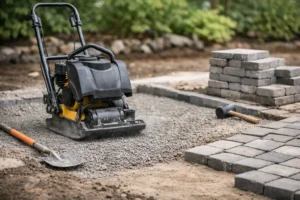
The second major factor is excavation and base work. This is where experienced hardscape contractors separate themselves. If the existing area has poor grading, soft spots, roots, old concrete, drainage issues, or limited access, the installation becomes more labor-intensive. Proper excavation depth, compacted base material, and accurate grading are what give a patio its long-term stability.
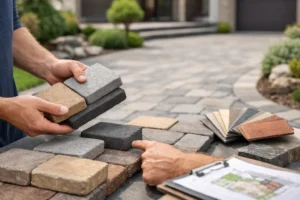
Material choice also moves the price. Basic concrete pavers tend to be more budget-friendly than premium shapes, larger-format units, or higher-end finishes. Pattern complexity plays a role too. A simple running bond installs faster than a detailed multi-size layout with accent borders and custom curves.
Then there are the edge details. Retaining edges, steps, seating walls, lighting coordination, transitions to pool decks or walkways, and built-in features can raise the overall investment. They also improve the finished space significantly, so this is where homeowners often balance budget against design goals.
Typical patio paver installation cost ranges
In the Tampa Bay area, many homeowners can expect patio paver installation cost to fall within a broad per-square-foot range depending on materials, site prep, and project complexity. For a standard patio with quality concrete pavers and normal site access, the installed cost often lands around $14 to $24 per square foot. More custom projects with premium pavers, elaborate borders, heavier excavation, drainage corrections, or integrated features can run higher.
That means a modest patio may come in at a few thousand dollars, while a larger custom backyard project can move well beyond that. The best way to think about pricing is not just by square footage, but by scope. Two 400-square-foot patios can have very different costs if one goes over a flat open yard and the other requires demolition, grading correction, and custom detailing.
If you receive a quote that feels unusually low, it is worth asking what is included. Some estimates leave out demolition, hauling, compaction, edge restraints, polymeric sand, or cleanup. Others reduce costs by cutting corners in the base. A patio may look finished on day one and still fail early if the preparation underneath was not done correctly.
Why base preparation has such a big impact on price
Homeowners usually notice the color and pattern first, but the real value of a paver patio is below the surface. The base is what supports the patio, promotes drainage, and helps prevent movement over time. In Florida conditions, that step is not optional.
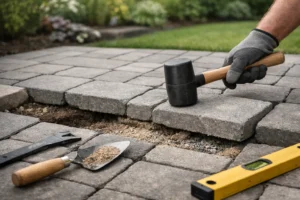
A properly built patio starts with excavation to the needed depth, followed by base material placed and compacted in lifts. The surface is then screeded for consistent bedding before the pavers are installed, restrained, sanded, and compacted into place. Each of those steps takes labor, equipment, and attention to detail.
That is one reason patio paver installation cost can vary so much from one contractor to another. If one company plans for thorough grading and compaction while another prices the bare minimum, the quotes will not match. Neither will the long-term result.
Drainage, grading, and Florida weather
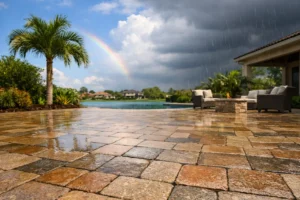
In Tampa, Clearwater, St. Petersburg, Brandon, and surrounding communities, drainage should be part of the conversation from the beginning. Afternoon storms, flat lots, and water runoff from roofs or pool areas can all affect how a patio performs.
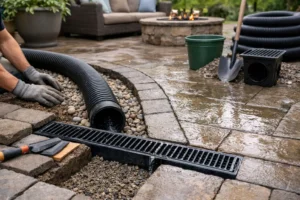
If water needs to be redirected, the cost may increase because the crew may need to adjust slope, tie into existing hardscape, or install drainage solutions. That added investment usually protects the patio and the surrounding property. Standing water, erosion, and washout are much more expensive to deal with after installation.
This is also where local experience matters. A patio that looks great in a showroom photo still has to work in a real Florida backyard. Sun exposure, stormwater, soil movement, and how the space will be used all influence the right installation approach.
Design choices that raise or lower cost
Not every upgrade affects the budget equally. Paver style and size matter, but layout complexity can matter just as much. Straight, simple layouts are usually more efficient to install. Curves, inlays, soldier courses, contrasting borders, and mixed-size patterns add cutting time and detail work.
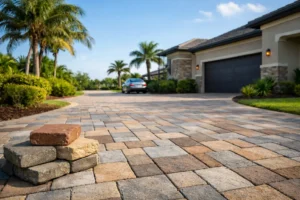
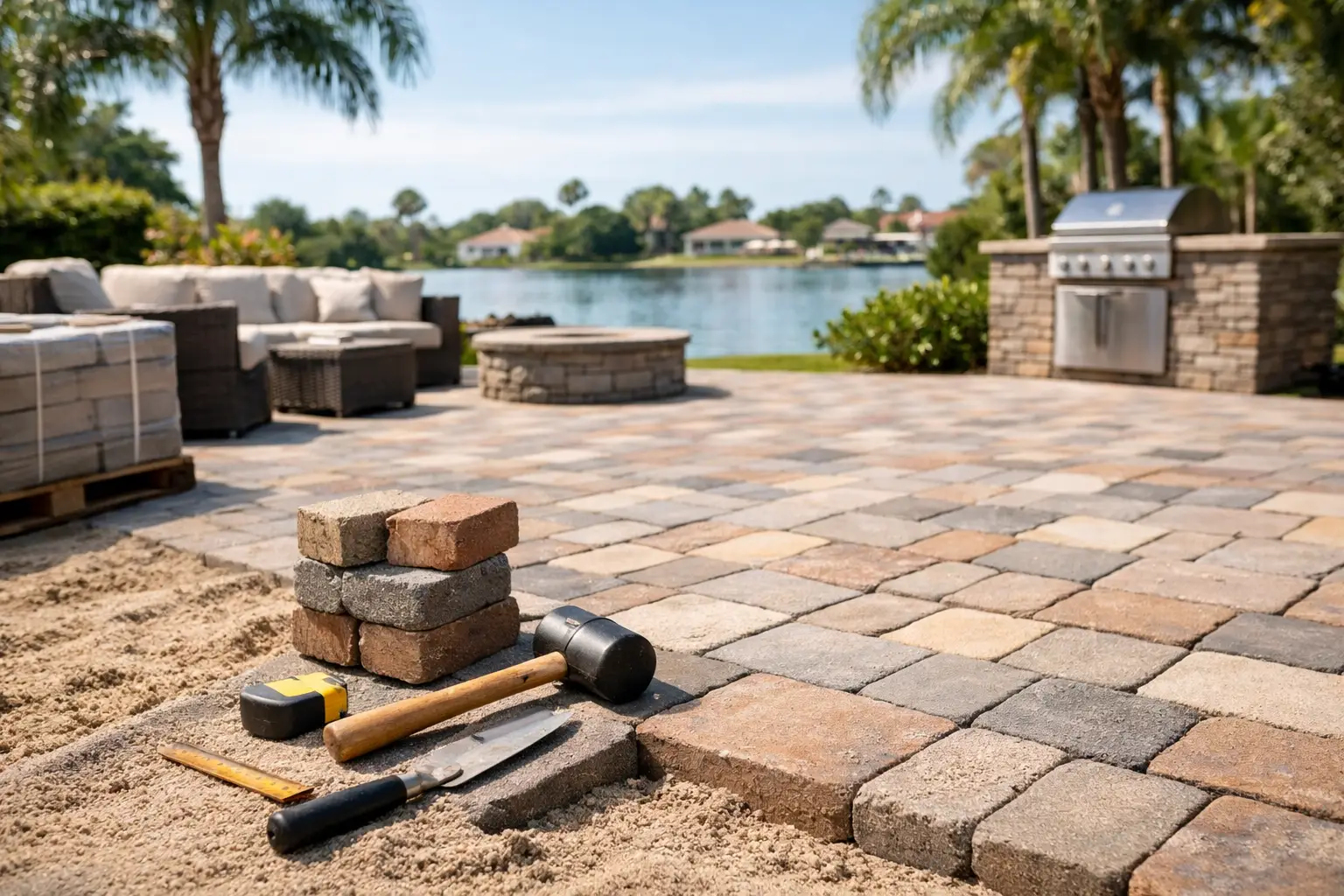
Color blends and textured finishes may also come at different price points depending on the manufacturer and availability. Some homeowners want a clean, understated patio that complements the home. Others want a more custom outdoor living space that ties into a pool deck, pergola, fireplace, or walkway. Both are valid – they just sit at different budget levels.
Access to the backyard is another design-related cost issue people do not always expect. Narrow gates, fences, limited equipment access, and tight working areas can increase labor time, especially when materials and debris have to be moved manually.
Repair vs. full replacement
Sometimes homeowners ask whether a damaged patio can simply be repaired. If the issue is isolated – a small sunken section, loose edge, or minor separation – repair may be a practical option. But if the base has failed across a wider area, replacement is often the better long-term decision.
A patch can look more affordable at first, but if the underlying grading or compaction problem remains, more sections may move later. A good contractor should explain that trade-off clearly instead of pushing a quick fix that will not hold up.
How to compare quotes the right way
Price matters, but scope matters more. When comparing patio estimates, ask what is included in excavation, base depth, compaction, drainage planning, edge restraints, sand, cleanup, and warranty coverage. Also ask whether the crew is licensed and insured and whether the company handles the full project from preparation to final walk-through.
The safest quote is not always the cheapest or the highest. It is the one that clearly reflects a complete installation process. A professional proposal should give you confidence that the patio will look finished, drain properly, and stay structurally sound over time.
For many homeowners, that peace of mind is worth paying for. A patio is a visible part of the home, but it is also a surface your family and guests will use for years. The workmanship shows up every day.
Is a paver patio worth the cost?
For most homeowners planning to stay in their home and use their outdoor space regularly, the answer is yes. A well-installed paver patio adds usable square footage outdoors, improves curb appeal, and usually requires less long-term hassle than surfaces that crack or stain more easily. Individual pavers can also be repaired more selectively than poured concrete in many situations.
Just as important, a patio can change how the property feels. It creates a place for grilling, relaxing, entertaining, or connecting other outdoor features into one cohesive space. When it is designed well and installed on a strong base, it becomes more than a decorative upgrade.
That is why companies like Top Pavers focus so heavily on preparation, drainage, and clean execution instead of just surface appearance. The goal is a finished patio that looks sharp on day one and still performs seasons later.
If you are budgeting for a new patio, the smartest next step is to get an on-site assessment from a contractor who understands local soil, drainage, and installation standards. The right quote should tell you more than the price. It should show you exactly how your patio will be built to last.