
A driveway that sheds water the wrong way can create problems long before it shows cracks. In Florida, heavy rain, sandy soils, and frequent runoff put a lot of pressure on any surface, which is why permeable paver driveway installation gets so much attention from homeowners who want more than a good-looking entrance. When it is built correctly, it helps manage stormwater, supports vehicle traffic, and adds curb appeal without sacrificing performance.
For Tampa Bay homeowners, that balance matters. You want a driveway that looks clean and upscale, but you also need something that can handle downpours, heat, and daily use. Permeable pavers can do that well, but only if the design, excavation, base preparation, and drainage strategy are handled with precision.
What permeable paver driveway installation actually does
A standard driveway is built to move water off the surface as quickly as possible. A permeable system works differently. Water passes through the joints between the pavers, moves into a specially prepared aggregate base below, and then slowly infiltrates into the soil or drains according to the site plan.
That difference changes the whole installation method. This is not just a decorative paver driveway with wider joints. A true permeable system depends on open-graded stone, consistent compaction, proper depths, edge restraint, and grading that matches the property’s drainage conditions.
For many homes, the biggest benefit is better water management. Instead of watching rain rush toward the garage, sidewalk, or street, the driveway becomes part of the drainage solution. That can reduce puddling, help with erosion around the driveway edges, and support a cleaner, more stable surface during Florida’s rainy season.
Why it makes sense in the Tampa Bay area
Not every property needs a permeable driveway, and that is worth saying upfront. If your lot already drains well and your main goal is purely aesthetic, a traditional paver system may be the better fit. But where runoff, standing water, or drainage restrictions are part of the conversation, permeable pavers deserve a serious look.
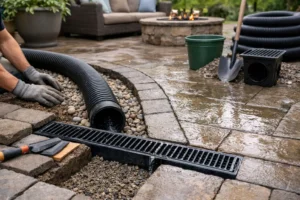
In Tampa, Brandon, Riverview, Clearwater, and St. Petersburg, site conditions can vary a lot from one neighborhood to the next. Some properties have sandy soils that support infiltration well. Others have tighter soils, lower elevations, or drainage patterns that require underdrains or additional planning. Coastal exposure, frequent storms, and high water volumes make proper design more important, not less.
That is why installation quality matters so much. A permeable driveway can perform beautifully, but it is less forgiving of shortcuts. If the excavation is shallow, the stone is wrong, or the joints are not maintained, the system will not work the way it should.
Permeable paver driveway installation step by step
The process starts with evaluating the site, not picking a color. Before any material decisions are finalized, the driveway area should be reviewed for slope, soil conditions, drainage patterns, elevation near the home, and expected traffic load. A driveway that handles passenger vehicles has different structural needs than one that regularly sees heavier trucks or trailers.
Site layout and excavation
Once the layout is established, the existing surface is removed and the area is excavated to the required depth. Depth depends on the paver system, the soil, and the structural demands of the project. This is one of the most important phases because it creates the space for the base that will actually carry the load and manage the water.
In Florida, excavation also has to account for how the driveway ties into the garage, sidewalk, street, and surrounding landscaping. The surface can look level to the eye and still be wrong for drainage. Good installation means those transitions are carefully planned from the beginning.
Base preparation and drainage layer
This is where a permeable system separates itself from a standard paver driveway. Instead of dense base materials designed to lock tightly and shed water, permeable systems use open-graded aggregate that creates void space for water storage and movement.
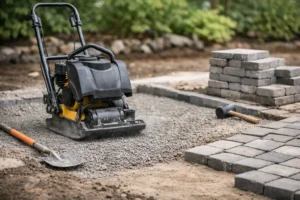
The stone is installed in lifts and compacted properly to build a stable structural base. If the project calls for geotextile fabric, underdrains, or additional drainage controls, those are installed according to the site needs. There is no one-size-fits-all formula here. The right build depends on the property.
Bedding layer and paver placement
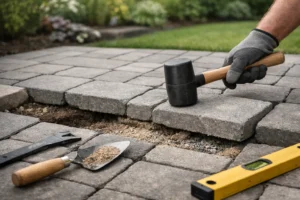
Above the base, a bedding layer of clean stone is placed and screeded evenly. The pavers are then installed in the selected pattern, with close attention to alignment, edge integrity, and surface consistency. Permeable pavers are designed to maintain joint openings that allow water to pass through.
The visual result matters, especially on a front-entry driveway where curb appeal is front and center. But appearance should never come at the expense of performance. The strongest installations are the ones where design and structural execution are treated as equally important.
Joint fill, compaction, and finishing
After the pavers are placed, the joints are filled with clean aggregate that supports infiltration. The surface is compacted to seat the pavers and stabilize the system. Final cleanup, edge checks, and finish grading around the driveway help ensure the project looks sharp and functions correctly from day one.
A professional crew should leave the site clean, the transitions smooth, and the finished driveway ready for use after the proper set time. That sounds basic, but clean execution is part of quality work.
Design options and curb appeal
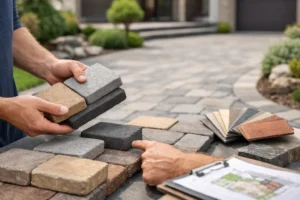
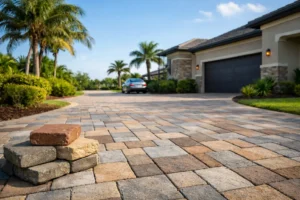
One of the reasons homeowners choose pavers over poured concrete is flexibility in design. Permeable systems still offer a polished, high-end look, with options in color, shape, texture, and pattern that can match the home’s architecture.
For a coastal Florida home, a lighter tone may help keep the surface cooler and create a brighter, cleaner appearance. For a more traditional property, a blended earth-tone paver can add warmth and definition. Borders, soldier courses, and contrasting accents can also help frame the driveway without making it look busy.
The key is choosing a design that fits the property and the scale of the home. A driveway should enhance the front elevation, not compete with it.
What homeowners should know about maintenance
Permeable pavers are often described as low maintenance, which is true compared with many surfaces, but low maintenance does not mean no maintenance. The joints need to remain open enough for water to pass through, so regular care matters.
That usually means keeping the surface free of excessive debris, dirt, and organic buildup. Leaves, sediment, and neglected landscaping can gradually reduce infiltration. In some cases, vacuum sweeping or joint stone replenishment may be recommended over time.
The upside is that individual pavers can be repaired or replaced more easily than a cracked slab. If a section is disturbed for utility work or settling needs correction, the system is generally more serviceable than monolithic concrete.
Cost, value, and when it is worth it
Permeable paver driveway installation usually costs more upfront than basic concrete or asphalt, and in many cases it also costs more than a standard paver driveway because of the base requirements and drainage detailing. That is the honest answer.
What homeowners are paying for is not just the finished surface. They are paying for excavation, specialized aggregate, water management, structural performance, and a more refined installation process. When runoff problems, drainage concerns, or long-term property value are part of the equation, that added investment can make real sense.
It also helps to think beyond first cost. A driveway that manages water better, looks better, and avoids some of the common cracking and drainage issues associated with cheaper installations can deliver better long-term value. That value depends on the site and the quality of the work.
Choosing the right contractor for permeable paver driveway installation
This is not a project to hand over to the lowest bidder with a skid steer and a stack of pavers. A contractor needs to understand grading, compaction, drainage behavior, edge restraint, and the demands of Florida conditions. The finished surface may be what people notice, but the buried work is what determines whether the driveway lasts.
Ask how the base is built. Ask how drainage is evaluated. Ask who is doing the work and how cleanup is handled. A licensed and insured local contractor with real experience in driveway paver installation should be able to explain the process clearly and confidently.
At Top Pavers, that is exactly how these projects are approached – with attention to design, structural prep, and clean execution from estimate to final walkthrough. For homeowners who want a driveway that looks finished and performs in Florida weather, that level of care matters.
A well-built permeable driveway does more than improve the front of your home. It gives rainwater somewhere to go, keeps the surface working the way it should, and turns a routine upgrade into a smarter long-term investment.