A paver patio or driveway usually does not fail because of the pavers. It fails because of what is underneath them. If you are asking how to prepare ground for pavers, you are really asking how to build a surface that stays level, drains properly, and holds up through Florida heat, heavy rain, and daily use.
In Tampa Bay, that matters more than most homeowners realize. A beautiful pattern and premium paver color can only go so far if the ground is soft, the base is too thin, or the slope sends water back toward the house. Good prep work is what makes the finished project look sharp on day one and still perform years later.
Why ground preparation matters so much
Pavers are a flexible system, but they are not forgiving of poor base work. When the soil below shifts, holds water, or settles unevenly, the surface above starts to move with it. That is when you see low spots, loose borders, standing water, and edges that drift out of line.
The goal is simple. You want a stable subgrade, a properly compacted base, and a bedding layer that supports the pavers evenly. For patios and walkways, that may sound straightforward. For driveways, pool decks, or areas with drainage challenges, the details become more demanding, and that is where experience makes a real difference.
How to prepare ground for pavers step by step
Every project starts with layout and excavation. Before any soil is removed, the area should be marked clearly so the final dimensions, curves, and elevations are set from the beginning. This is also the stage where you identify doors, steps, pool coping, driveway tie-ins, and any nearby structures that affect finished height.
Excavation depth depends on the application. A pedestrian patio needs less base than a driveway that will carry vehicle weight. In Florida, soil conditions can vary from sandy and easy-draining to soft areas that need more correction than expected. That is why there is no one-size-fits-all depth. A light-use walkway and a paver driveway should never be built on the same base plan.
Once the area is excavated, the subgrade needs to be shaped and compacted. This is one of the most overlooked parts of the process. If the native soil is left loose, the layers above it will eventually settle. If there are soft pockets, roots, buried debris, or wet spots, those need to be addressed before base material goes in. Skipping this step often creates problems that show up months later, not during installation.
Set the right slope before the base goes in
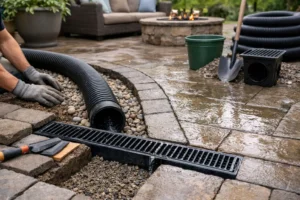
Drainage is built into the project, not added after the fact. The ground should be graded so water moves away from the home and does not collect on the paver surface. For many residential projects, a gentle slope is enough to shed water without making the area feel uneven underfoot.
This is where precision matters. Too little slope can leave puddles. Too much can affect furniture placement, walking comfort, or transitions at doorways and garages. Around pool decks, the drainage plan also needs to balance runoff direction with safety and surrounding landscaping.
Install and compact the base in lifts
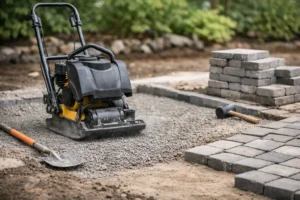
The base layer is what gives the system strength. In most paver installations, this is a crushed aggregate material that compacts tightly while still allowing water movement. It should not be dumped in all at once and compacted only at the top. It performs best when placed in lifts and compacted in stages.
That process creates a denser, more stable foundation. It also helps maintain consistent grade across the entire area. If the base thickness varies too much, the finished paver surface can mirror those inconsistencies.
For a driveway, this becomes even more critical. Vehicle loads put repeated pressure on the same paths, especially where tires turn or brake. A weak base may still look fine at first, but that does not mean it is built to last.
The bedding layer is not the base
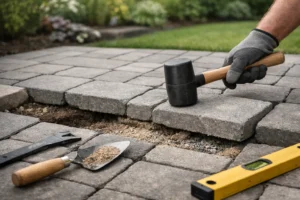
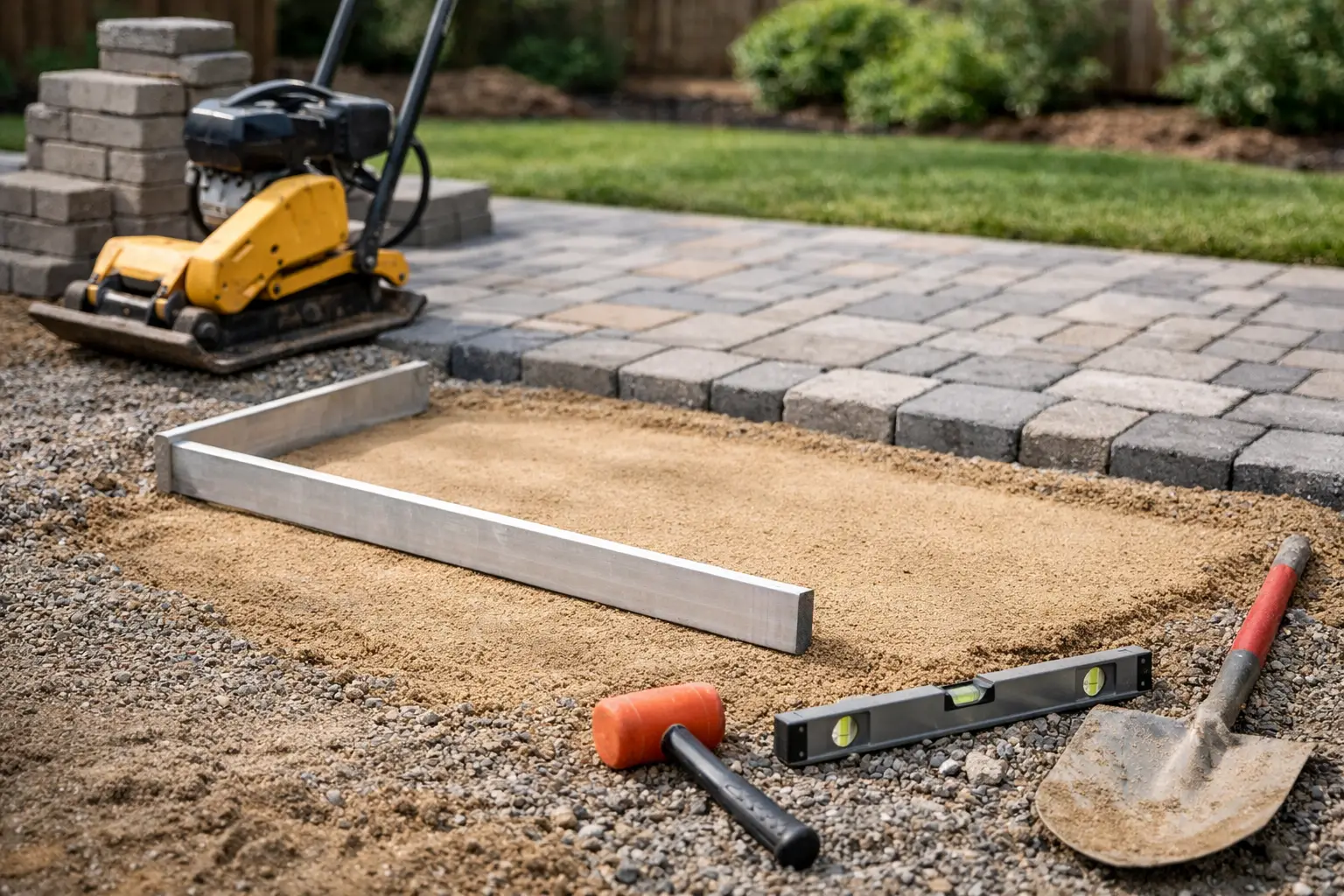
After the compacted base is complete, a thin bedding layer of sand is used to create a smooth setting bed for the pavers. This layer is for screeding and minor leveling, not for correcting a poor base. If the crew is trying to fix dips and height problems with extra sand, the installation is already heading in the wrong direction.
The bedding layer should be uniform and undisturbed before the pavers are placed. Once the pavers go down, they can be compacted into the sand and locked together with joint material. But the stability still depends on the layers beneath.
That is why homeowners sometimes think paver installation is mostly about laying pattern and color, when the real structural work happened earlier. The visible finish gets attention. The hidden prep determines performance.
How soil and climate affect paver prep in Florida
Knowing how to prepare ground for pavers in Florida means accounting for conditions that are different from many other parts of the country. Tampa Bay properties deal with strong sun, frequent downpours, humidity, and in some areas, shifting or sandy soils. Those conditions can be workable, but they require the base and drainage plan to be taken seriously.
Sandy soil can drain well, which is helpful, but it can also move if it is not compacted properly. Areas with organic material or softer ground may need undercutting and replacement before the base is installed. On coastal properties or lots with existing drainage problems, grading decisions become even more important.
This is also why proper edge restraint matters. Even a well-prepared base can start to spread if the perimeter is not secured. Over time, movement at the edges can affect the whole field of pavers, especially in high-traffic areas.
Common mistakes homeowners make
The most common mistake is not excavating deep enough. People often want to save time, avoid hauling off dirt, or keep the finished height close to the existing yard. But when there is not enough room for a true base, something has to give, and it is usually long-term stability.
Another frequent issue is using the wrong material below the pavers. Loose fill, leftover gravel, or poorly graded stone may seem close enough, but paver systems rely on materials that compact predictably and support uniform loads. Improvising under the surface usually leads to repairs later.
Poor drainage planning is another big one. Water should never be an afterthought on a hardscape project. If runoff is directed toward the home, garage, or pool enclosure, the installation may create a larger property issue than the one it was meant to solve.
Then there is compaction. Hand tamping may be fine for very small touch-ups, but larger areas need proper mechanical compaction. Without it, the base may look level while still hiding weak spots that settle under use.
When DIY works and when it does not
A small garden path on stable ground is very different from a driveway, front entry, or pool deck. Some homeowners can handle a simple paver project if they have the right tools, enough time, and a clear understanding of grading and compaction. Even then, preparation is the part that tests most DIY installations.
Larger projects usually benefit from professional installation because there is less room for error. Elevation control, drainage, base thickness, cuts, edge restraints, and final compaction all need to work together. If one part is off, the repair can cost more than doing it correctly the first time.
That is especially true for Florida homes where rain events can expose shortcuts quickly. A patio that holds water or a driveway that starts shifting at the tire path is not just disappointing. It is expensive to redo once everything is in place.
What a professionally prepared paver base looks like
A well-prepared base is not flashy, but you can see the difference in the finished result. The surface feels solid underfoot. Water moves where it should. Edges stay crisp. Transitions to the home, driveway, or pool area look intentional instead of forced.
Just as important, the project stays easier to maintain. When the groundwork is right, joint sand performs better, pavers stay aligned, and future settling is less likely. That protects both curb appeal and long-term value.
For homeowners investing in outdoor living, proper preparation is not an upgrade. It is the foundation of the entire job. At Top Pavers, that is why base work, drainage, and clean execution are treated as core parts of every installation rather than details to rush through.
If you are planning a new patio, walkway, pool deck, or driveway, focus less on the paver itself and more on what is happening below it. The part no one sees is the part that decides how everything else will hold up.